 Lake Ashi Cruise
Hakone Weather: Best Time to Visit, Month by Month
Last reviewed August 2026
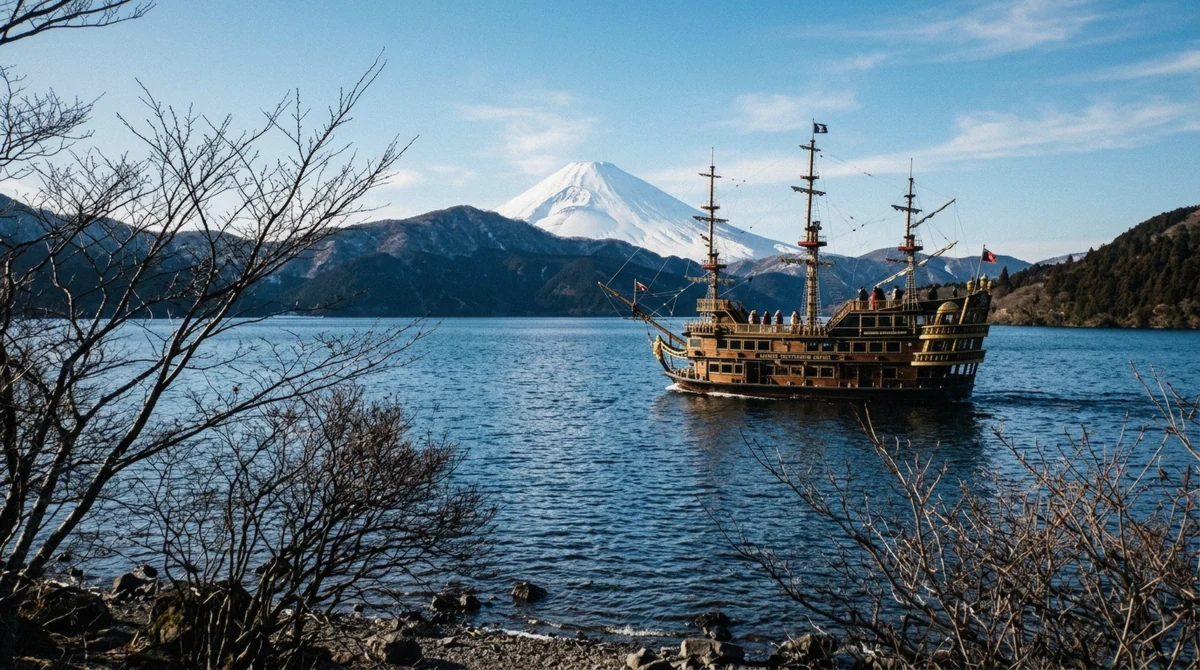
The best months for Hakone weather are late October through early December and again in April and May, when the air is dry enough to hold a clear view of Mount Fuji and the caldera is not shrouded in the summer haze that sits over Lake Ashi from June to September. October and November also carry the heaviest crowds of the year, so a quieter dry-season window in late January or February trades a colder deck for thinner queues. Below is what the town's own temperature record says, why the Lake Ashi crossing runs colder than that number, and when the boat gets cancelled outright.
Quick answer Month by month, and when the mountain actually shows
Late October to early December and April to May give the clearest air and the best odds of seeing Mount Fuji from the water. Midsummer trades that view for haze and heat, and a rainy or windy day can cancel the crossing outright with no substitute service. Layer up regardless of the season: the lake itself runs three to four degrees colder than the town's forecast.
Key takeaways
- Hakone town averages 9°C in January and 29°C in August, but the lake sits 3–4 degrees colder at 723 metres
- Mount Fuji shows best in the cold months and at the ends of the day, never at midday in summer haze
- October and November bring the clearest air and the year's busiest weekends at once
- A day of thick fog or strong wind can cancel the Lake Ashi crossing with no substitute service
- Check which day tour to book before locking in dates around a Fuji-viewing window
- The tour that refunds a closed ropeway is the safer pick in shoulder season
Hakone Month by Month
The town's own numbers
These are average daily highs for Hakone town, in Celsius, drawn from the station's long-run climate record. They describe the town at valley level, not the water, and Lake Ashi at 723 metres runs three to four degrees colder than every figure below.
| Month | Average high (town) | What it feels like on the water | Fuji odds |
|---|---|---|---|
| January | 9°C | Cold, still air, the clearest deck of the year | Best of the year |
| February | 10°C | Cold, occasional snow on the caldera rim | Very good |
| March | 13°C | Chilly, wind picks up on open water | Good, improving |
| April | 17°C | Mild, cherry blossom crowds inland | Good |
| May | 21°C | Comfortable, Golden Week crowds on the piers | Good, hazier by month end |
| June | 24°C | Warm, rainy-season cloud most days | Poor |
| July | 28°C | Hot, humid, frequent haze | Poor |
| August | 29°C | Hot, but a jacket still earns its keep on deck | Poor |
| September | 26°C | Warm, typhoon risk on the water | Fair, improving late month |
| October | 21°C | Mild, air sharpens noticeably | Very good |
| November | 16°C | Cool, best foliage on the caldera rim | Best of the year |
| December | 12°C | Cold, thin crowds after early December | Very good |
Reading the table
January and November tie for the best Fuji odds, but for opposite reasons: January is simply cold and dry, while November pairs clear air with the last of the autumn colour. May sits in between, comfortable temperatures but a haze that thickens through the month as humidity builds toward the June rains.
Why the Lake Is Colder Than the Forecast
Elevation does the work
Lake Ashi sits at 723 metres, well above the town center where the weather station reads its numbers, and it runs three to four degrees colder than the town figures in the table above. A 21°C forecast in October can feel closer to 17°C on the pier before the boat even leaves. The same gap holds in reverse on a mild winter day: a forecast that reads 9°C in town can sit closer to 5°C or 6°C once you step off the bus at Togendai.
Wind adds a second layer on top. The lake sits inside a caldera, and gusts funnel down the ridgeline onto open water with nothing to break them. Even on a sunny, calm-looking day in town, the pier can carry a steady breeze that a forecast reading never captures, because most weather apps report conditions at valley stations rather than at 723 metres over open water. The crossing itself takes 25 to 35 minutes, which keeps direct exposure short even in January, but Owakudani afterward sits higher again and is colder still, which is why operators advise a jacket even in summer.
Why the app on your phone gets it wrong
Most weather apps default to a forecast station near central Hakone or Odawara, both well below the lake. That is fine for planning a walk through town, but it consistently overstates how warm the crossing will feel. Add the wind, subtract the shade of an open deck at midday versus the shelter of a covered promenade, and the practical rule holds: whatever the app says, expect the pier to run several degrees cooler and noticeably breezier.
When Mount Fuji Actually Shows
Cold air over hot
Mount Fuji, 3,776 metres, is visible far more often in the cold months than in summer, when humidity and haze build up over the Kanto plain and hide the peak for weeks at a stretch. Every tour operator states in writing that the view is not guaranteed on any given sailing, cold season included; it is a probability, not a promise.
- Best odds: clear, cold, dry days from December through February and again in late October and November
- Best time of day: early morning before the air warms, or the last hour before sunset
- Worst odds: midday in July and August, when haze sits thickest over the caldera
- Rain or heavy cloud rules it out at any time of year, regardless of season
Reading the Sky the Morning Of
A quick check before you leave the hotel
Because forecasts written a week out are unreliable for a specific mountain view, the more useful habit is checking conditions the morning of departure rather than trusting a seven-day outlook. A cloudless dawn in Tokyo does not guarantee a clear Hakone; the caldera can hold its own localized haze even when the city sky is blue. Live traffic and webcam feeds from the Owakudani ropeway station, where available, are a better same-day signal than any generic weather app, since they show the actual air over the valley rather than a regional average.
A practical rule that holds across seasons: if the town forecast reads clear and calm with low humidity, the odds on the lake are good regardless of month. If the forecast reads muggy or hazy even under a nominally clear sky, treat the mountain view as unlikely no matter what the icon says.
Season by Season
Winter (December to February)
The coldest and clearest window. Daytime highs sit between 9°C and 12°C in town, colder on the water, and snow occasionally dusts the caldera rim without closing the roads. Crowds thin out sharply after the first week of December and stay light until the spring holidays.
This is also the window with the fewest cancelled sailings, because winter systems in this part of Japan tend to bring dry, stable high pressure rather than the fog banks and sudden squalls that cause more disruption in early autumn. A cold morning on the deck is uncomfortable without a jacket, but it is rarely a cancelled one.
Spring (March to May)
Temperatures climb from a chilly 13°C in March to a comfortable 21°C by May. Cherry blossom season and Golden Week in late April and early May fill the piers and the loop's buses; book the earliest sailing you can if you are traveling in that stretch.
March is an underrated pocket for travelers chasing thinner crowds: temperatures are already mild enough for a comfortable crossing, cherry blossom season has not yet started in the mountains, and visibility is still closer to winter's than to the haze that builds by late May.
Summer (June to August)
Hot, humid, and the least reliable window for Fuji. Highs reach 29°C in August, and the rainy season in June brings the wettest stretch of the year. The lake stays busy with domestic travelers on school holidays even though the mountain view is at its worst.
Early morning sailings are the best strategy in this stretch, both for temperature and for visibility: haze that builds through a hot afternoon is often thinner at first light, before the day's heat has had time to accumulate over the plain.
Autumn (September to November)
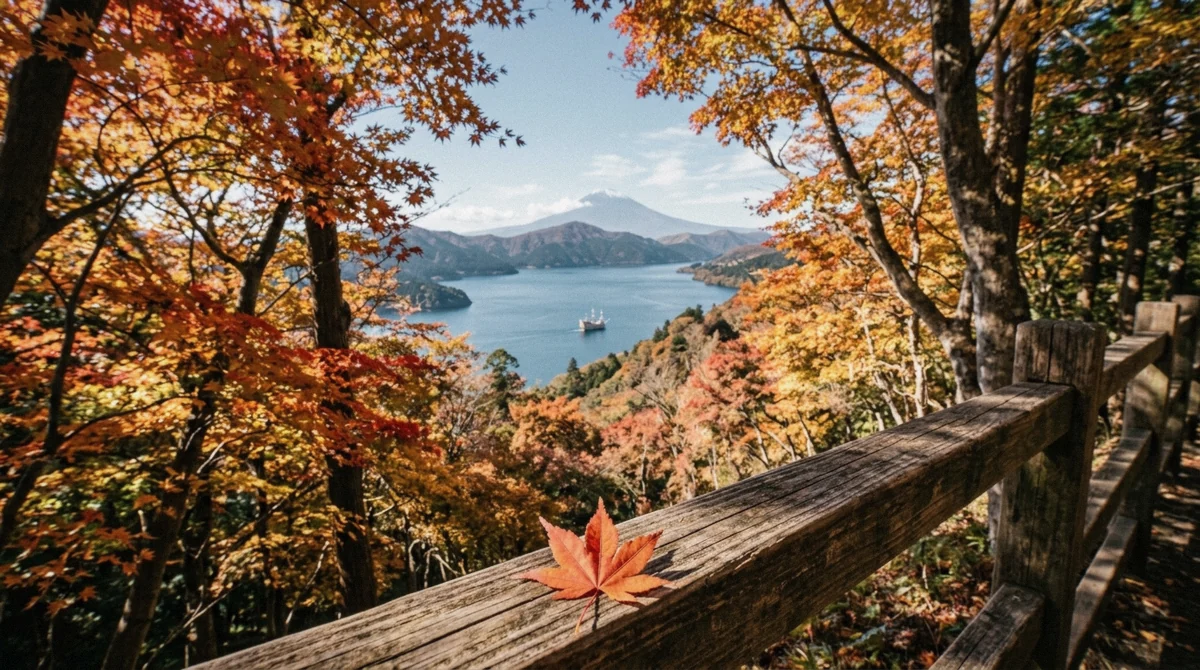
September carries lingering typhoon risk that can cancel sailings with little notice. By October the air sharpens and highs drop to 21°C, and November brings the best combination of foliage and clear Fuji views on the calendar, at the cost of the year's heaviest weekend crowds.
A useful split within the season: early September still runs warm and unsettled, closer in feel to summer than to the crisp weeks that follow, while the second half of October through November delivers the year's most consistently clear mornings. Weekday sailings in that later stretch are the closest thing to a guaranteed good day the calendar offers.
The Two Busiest Windows
Autumn color and spring holidays
Autumn colour on the caldera rim peaks in October and November, which are also the busiest weekends of the year on the lake. Cherry blossom and Golden Week fill April and May with a second, shorter surge, concentrated around the last week of April and the first week of May.
Outside those two windows, weekday sailings in the cold months are noticeably quieter, and the tour with the longest stop at the shrine is easier to enjoy without a crowd at the torii.
What to Wear on the Open Deck
Layer for the lake, not the town forecast
Because the lake runs three to four degrees colder than the town figures and the deck adds wind on top, dress for the number below the forecast, not the number itself.
- A windproof outer layer, even in a summer forecast of 28°C or higher
- A jacket for Owakudani afterward, which sits higher and colder than the pier
- Closed shoes; the open deck and gangways are uneven and can be wet
- Sunglasses and sunscreen for clear winter days, when reflected glare off the water is strong
- A compact umbrella for the rainy stretch from June through early July
When the Boat Does Not Sail
Fog and wind, not just rain
Sailings are altered or cancelled in thick fog or strong wind, and there is no substitute service on the water when that happens. Light rain rarely stops the boats; poor visibility and gusty conditions on the open lake do, since a low ceiling over the caldera can drop visibility on the water to a fraction of what it is in town, and the ships hold no reason to sail a route their crew cannot see across.
Because a closure can appear on short notice, it pays to pick the tour that refunds a closed ropeway if your dates fall in a season with real weather risk, and to check the forecast the morning of rather than the week before. September's lingering typhoon risk and the fog that can settle over the caldera on a humid summer morning are the two conditions most likely to catch a fixed itinerary off guard; a flexible morning or an afternoon buffer built into the day absorbs either without wrecking the rest of the loop.
Which Month Suits What You Want
If You are coming for the Mount Fuji photograph
December through March. Cold, clear air, and the mountain out far more often than in summer. Dress for a deck at 723 metres, not for the town forecast.
If You want autumn colour on the caldera rim
Late October into November, and book midweek. Those are the busiest weekends of the year on the loop.
If You are travelling with small children
May or October. Mild enough for an open deck, and the ropeway queues are shorter than in the holiday windows.
If You are coming in July or August
Go early. Midday haze hides the mountain most days, and the first sailings are both cooler and emptier.
If Your dates are fixed and the forecast is poor
Pick a tour that protects you. One listing refunds the whole booking if the ropeway is shut: the tour that refunds a closed ropeway.
What to Wear on the Open Deck
The crossing takes 25 to 35 minutes and most of the view is outside. The figures below are the town averages; subtract three to four degrees for the lake and more again for wind over open water.
| Season | Town average high | On the deck | What works |
|---|---|---|---|
| December to February | 9 to 12 degrees | Around 5 to 8, colder in wind | Proper coat, hat, gloves. The clearest Fuji days are also the coldest |
| March to May | 13 to 21 degrees | Around 9 to 17 | Layers. Mornings bite, afternoons do not |
| June to August | 24 to 29 degrees | Around 20 to 25 | Light layer for the wind, sun cover. Owakudani afterwards is cooler again |
| September to November | 16 to 26 degrees | Around 12 to 22 | A jacket you can carry. Late November needs the winter coat |
Operators say the same thing in their own material: carry a light jacket for Owakudani even in August. The valley sits higher than the lake and the steam does nothing to warm it.
Questions About Hakone Weather
Is Hakone colder than Tokyo?
Yes. Hakone town sits at higher elevation than central Tokyo and runs several degrees cooler year round, and Lake Ashi itself runs a further three to four degrees colder than the town figures. Pack a layer even when the Tokyo forecast looks mild.
When is the best time to visit Hakone?
Late October through early December and April through May give the clearest air and the best odds of a Mount Fuji view, at the cost of the year's heaviest crowds. January and February are colder but quieter, with similarly strong visibility.
How many days do you need in Hakone?
One long day covers the lake and one ropeway crossing; two days lets you spread the loop across a quieter morning and afternoon rather than rushing both. Riding the loop in one day breaks down what fits into a single itinerary.
Does it snow in Hakone in January?
Occasional light snow dusts the caldera rim and higher ground around Owakudani, though heavy accumulation is uncommon at lake level. January's average high in town is 9°C, colder on the water, and it is the clearest month for a Fuji view.
When can you actually see Mount Fuji from Lake Ashi?
Most reliably on cold, dry mornings from December through February and again in late October and November, and best in the first and last hours of daylight. Midday in summer haze is the least likely time of the entire year.
What is the wettest time of year in Hakone?
June into early July, during the rainy season, followed by a secondary typhoon risk in September that can cancel sailings with little warning. Both stretches carry the highest chance of the crossing being altered for weather.
Do I need a jacket in Hakone in summer?
Yes. Town highs reach 28 to 29°C in July and August, but the open deck and the higher ground around Owakudani both run noticeably colder, and operators advise a jacket on the water even in the hottest months.
None of these windows guarantee a clear mountain, only better odds of one. Check the forecast the morning of your visit, layer for the lake rather than the town, and treat a Fuji sighting as a bonus on any date you book rather than the deciding factor in choosing it.