 Lake Ashi Cruise
Tokyo to Hakone: Why There Is No Bullet Train, and What to Take Instead
Last reviewed August 2026
Searching for a Tokyo to Hakone bullet train turns up a train that does not exist: no Shinkansen line reaches Hakone itself, since the Tokaido Shinkansen stops at Odawara and every rider changes there for a local railway or a bus. The three ways that actually work are the direct Odakyu Romancecar from Shinjuku, the Tokaido Shinkansen to Odawara followed by a change, and the ordinary Odakyu express, each trading time against fare in a different way. Below are the real times and fares for each, where you actually arrive, and how to finish the trip on to Lake Ashi.
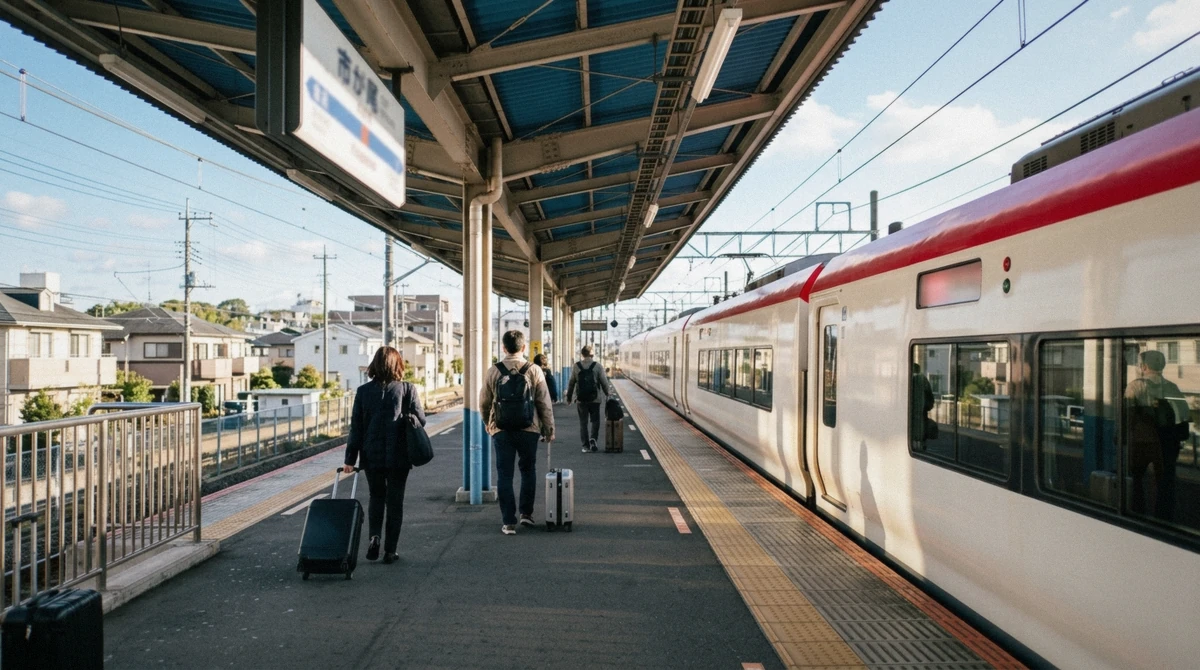
Quick answer Three routes that work, and the train that does not exist
There is no bullet train to Hakone. The fastest direct option is the Odakyu Romancecar from Shinjuku, about 85 minutes for 2,470 yen. The Tokaido Shinkansen is faster to Odawara, about 30 minutes, but that is not Hakone, and every rider changes there for a local train or bus.
Key takeaways
- No bullet train reaches Hakone; the Tokaido Shinkansen stops at Odawara, where you change for the Hakone Tozan railway or a bus
- The Romancecar from Shinjuku takes 85 minutes for 2,470 yen, direct with no transfer
- The Shinkansen to Odawara is covered by the Japan Rail Pass and takes about thirty minutes from Tokyo or Shinagawa
- The cheapest option is the ordinary Odakyu express at 1,270 yen, about two hours with one change at Odawara
- From Hakone-Yumoto, the Hakone loop in one day continues on to the Lake Ashi sightseeing cruise
- A guided option with hotel pickup removes the transfer entirely, see day tours that reach the lake
There Is No Bullet Train to Hakone
The Tokaido Shinkansen, Japan's bullet train line between Tokyo and Osaka, does not run into Hakone at any point. Its nearest stop is Odawara, a station on the coastal edge of the Hakone area, and every traveler arriving by Shinkansen changes there for a different, slower train or a bus to actually reach Hakone-Yumoto and the lake beyond it. The search for a bullet train to Hakone is common enough that it is worth stating plainly: it does not exist, and no amount of looking at the wrong timetable will find it.
The three real options below all get you there; none of them is a single high-speed ride the whole way.
The Three Ways, Compared
| Route | Time | Fare | Who it suits |
|---|---|---|---|
| Shinjuku → Hakone-Yumoto, Odakyu Romancecar | 85 minutes | 2,470 yen (2,420 yen e-ticket) | Direct riders who want no transfer and a reserved seat |
| Tokyo/Shinagawa → Odawara, Tokaido Shinkansen, then change | about 30 minutes to Odawara, plus the onward leg | about 3,500 yen to Odawara | Japan Rail Pass holders and travelers already near a Shinkansen station |
| Shinjuku → Hakone-Yumoto, ordinary Odakyu express | about 2 hours | 1,270 yen | Budget travelers with no rail pass to spend |
For most travelers starting in central Tokyo with no Japan Rail Pass already in hand, the Romancecar is the straightforward pick: one train, one seat, no change, for a fare in between the other two options. The Shinkansen route only wins outright once the Rail Pass makes the Odawara leg effectively free.
Which Route Fits Your Trip
If You are holding a Japan Rail Pass
Take the Shinkansen to Odawara. The pass covers it, so the leg is effectively free, and you pick up the Tozan railway there. Only Kodama trains and selected Hikari trains stop at Odawara, so read the board before you board.
If You want to arrive rested and without a change
Book the Romancecar from Shinjuku. Eighty-five minutes, a reserved seat, no transfer, and the front carriages face down the line.
If You are counting every yen
Take the ordinary Odakyu express. About two hours with one change at Odawara for 1,270 yen, which is roughly half the Romancecar fare.
If You are staying two nights and moving around the caldera
Buy the pass from whichever end you start at, then read what the Freepass covers before you pick two-day or three-day.
If You have exactly one day and no appetite for connections
A coach day trip from Tokyo handles the whole reach for you. The trade is a fixed schedule and about eleven hours door to door.
The Romancecar from Shinjuku
The Odakyu Romancecar is the closest thing to a direct express to Hakone, and it is almost certainly what people mean when they search for a bullet train on this route, even though it is not one. It runs from Shinjuku to Hakone-Yumoto in 85 minutes, with no transfer, for 2,470 yen in reserved seating, or 2,420 yen bought as an e-ticket in advance. The train is comfortable rather than genuinely high-speed, with forward-facing reserved seats and, on some services, a front-facing observation car, but the appeal is the single unbroken ride rather than the top speed.
A Hakone Freepass bought from Shinjuku, at 7,100 yen, includes the ordinary Odakyu return leg but not the Romancecar surcharge; riding the Romancecar on a Freepass still costs the same 1,200 yen reserved-seat fee for an adult each way. What the Freepass covers has the full breakdown of what that pass does and does not include.
The Shinkansen to Odawara, and When It Wins
The Tokaido Shinkansen covers Tokyo or Shinagawa to Odawara in about thirty minutes for roughly 3,500 yen, and it is covered by the Japan Rail Pass, which the Romancecar and the Odakyu network in general are not. Not every Shinkansen service stops there, though: only Kodama trains, the slowest tier, and selected Hikari trains call at Odawara, so checking the timetable before boarding matters more on this route than on a Nozomi run straight through to Osaka.
This route wins for two groups specifically: Rail Pass holders, for whom the Odawara leg costs nothing extra on a pass already paid for, and travelers already near a Shinkansen station on the day, for whom thirty minutes beats 85 on the clock even accounting for the change at Odawara. For everyone else paying out of pocket, the fare works against it compared with the Romancecar's single, similarly priced ride.
The Cheap Way: the Ordinary Odakyu Express
The ordinary Odakyu express covers Shinjuku to Hakone-Yumoto for 1,270 yen, roughly half the Romancecar's fare, with one transfer at Odawara and a total journey of about two hours. It is not reserved seating and it is not a scenic or particularly comfortable ride; it is the standard commuter-grade train that happens to run all the way out to the Hakone area, and it is the fare travelers on a tight budget or making the trip more than once tend to default to.
The trade against the Romancecar is straightforward: about 35 extra minutes and one transfer, for roughly half the price. On a first trip with luggage, most travelers find the Romancecar's direct ride worth the difference; on a repeat trip or a short-notice change of plan, the ordinary express removes any need to reserve a seat in advance at all.
The Route on the Map
Shinjuku and Odawara are the two starting points; Hakone-Yumoto is where every route above lands before the final leg out to the lake.
Getting from Hakone-Yumoto to Lake Ashi
Hakone-Yumoto is not the lake; it is the gateway station where the mountain routes into Hakone begin. From there, the Hakone Tozan railway climbs to Gora in 35 minutes, the first leg of the Hakone loop in one day toward the ropeway and the boat. Travelers headed straight for the lake shore without the full loop can instead take a bus directly; Togendai, on the lake's north shore, is about 46 minutes from Hakone-Yumoto by Tozan bus, with buses also running to the closer south-shore stops at Moto-Hakone and Hakone-machi.
- Via the railway and ropeway: Hakone-Yumoto → Gora (35 min) → onward by cablecar and ropeway toward Togendai
- Direct by bus: Hakone-Yumoto → Togendai, about 46 minutes
- Direct by bus: Hakone-Yumoto → Moto-Hakone or Hakone-machi, a shorter ride on the same bus network
Or Let a Coach Do It
None of the three train routes above solve the last leg from Hakone-Yumoto to the lake on their own; each still needs the railway, the bus or the loop to actually reach the water. Guided day tours that reach the lake collapse the entire trip, station changes included, into a single hotel pickup and a scheduled return, which removes both the Odawara transfer question and the Hakone-Yumoto to lake-shore leg in one booking. The highest rated day tour runs the ropeway and Owakudani alongside the lake on one fixed itinerary, and the day trip paired with Kamakura adds a stop at the Great Buddha on the same day, for travelers who would rather see two sights than manage two train changes.
Where Each Route Actually Drops You
The three routes do not end in the same place, and the difference costs you between fifteen and fifty minutes at the far end. Hakone-Yumoto is the gateway station and the start of the Tozan railway. Odawara is outside the caldera altogether, a transfer town on the coast.
Neither is on the water.
| Arrive at | How you got there | Distance from the lake | What to do next |
|---|---|---|---|
| Hakone-Yumoto | Romancecar, or ordinary express with one change | About 45 minutes | Tozan railway up to Gora, or the T-route bus straight to Togendai in about 46 minutes |
| Odawara | Shinkansen from Tokyo or Shinagawa | About an hour | Change to the Tozan railway for Hakone-Yumoto, or take a Tozan bus toward the lake |
| Moto-Hakone | Bus from either station | On the shore | Walk to the shrine torii and the pier |
| Togendai | Bus from Hakone-Yumoto, or the ropeway from Sounzan | On the shore | The northern pier, where the crossing to the southern ports starts |
That last row is the one worth planning around. Arriving at Togendai means you sail the full length of the lake southward, which is the direction the ridge and the shrine torii open up in front of you rather than behind. Arriving at Moto-Hakone means the shrine first and the crossing second.
Neither is wrong, but the photographs are different, and the four ports are not interchangeable.
One more piece of timing that catches people out on a day trip: the boat is the only leg of the journey with a real gap between departures. Trains and buses in Hakone run every fifteen to twenty minutes, the cablecar every fifteen, but sailings leave every thirty to sixty minutes and stop for the day around five in the afternoon. If you are working backwards from a Romancecar seat home, work backwards from the boat first.
Luggage, and the Thing Nobody Mentions
Hakone is a mountain resort reached by a switchback railway, a cablecar, an aerial ropeway and a boat. None of those were built with suitcases in mind. The Tozan railway carriages are short, the cablecar is a stepped box, and the ropeway gondolas seat a handful of people with nowhere to put a large case.
- Most ryokan and hotels will hold luggage from the morning of your arrival, so drop it before you start the loop rather than dragging it around the caldera
- Hakone-Yumoto station has coin lockers, but they fill by mid-morning on autumn weekends
- Forwarding a case ahead by takkyubin from your Tokyo hotel is the standard local move and usually arrives next day
- Coach day trips from Tokyo generally allow one piece per person, and at least one operator asks to be told in advance
If you are coming for the day and going back the same evening, none of this applies. If you are moving hotels, the difference between arriving unencumbered and arriving with two cases is roughly an hour of your first day.
Questions About Getting from Tokyo to Hakone
What is the best way to go from Tokyo to Hakone?
For most travelers with no rail pass, the Odakyu Romancecar from Shinjuku: 85 minutes, no transfer, for 2,470 yen. Japan Rail Pass holders often do better taking the Shinkansen to Odawara and changing there, since that leg costs nothing extra on a pass already paid for.
Is there a direct train from Tokyo to Hakone?
Yes, the Odakyu Romancecar runs direct from Shinjuku to Hakone-Yumoto with no transfer. The Tokaido Shinkansen is not direct to Hakone; it stops at Odawara, and every rider changes there for a local train or bus.
How much is the bullet train from Tokyo to Hakone?
There is no bullet train all the way to Hakone. The Tokaido Shinkansen portion, Tokyo or Shinagawa to Odawara, costs roughly 3,500 yen, and the onward leg from Odawara to Hakone-Yumoto is a separate fare on the Odakyu line.
How long is the bullet train from Tokyo to Hakone?
The Shinkansen segment to Odawara takes about thirty minutes. Add the change at Odawara and the onward local train or bus, and the full trip to Hakone-Yumoto runs close to the same total time as the direct Romancecar.
Does the Japan Rail Pass cover the trip to Hakone?
It covers the Tokaido Shinkansen leg to Odawara, since only Kodama and selected Hikari trains stop there. It does not cover the Odakyu Romancecar, the ordinary Odakyu express, or any of the local Hakone Tozan trains and buses beyond Odawara.
Which station do you arrive at in Hakone?
Hakone-Yumoto, the gateway station for the whole area, whichever of the three routes above you take. From there, a separate railway and bus network continues on toward Gora, the ropeway and Lake Ashi.
Once the bullet train question is out of the way, the choice is really about pass ownership and how much a saved 35 minutes is worth. Rail Pass holders take the Shinkansen to Odawara without thinking twice; everyone else is choosing between the Romancecar's single direct ride and the ordinary express's lower fare, and either one gets you to Hakone-Yumoto in time for the rest of the day.