 Lake Ashi Cruise
Where to Stay in Hakone: The Four Areas Compared
Last reviewed August 2026
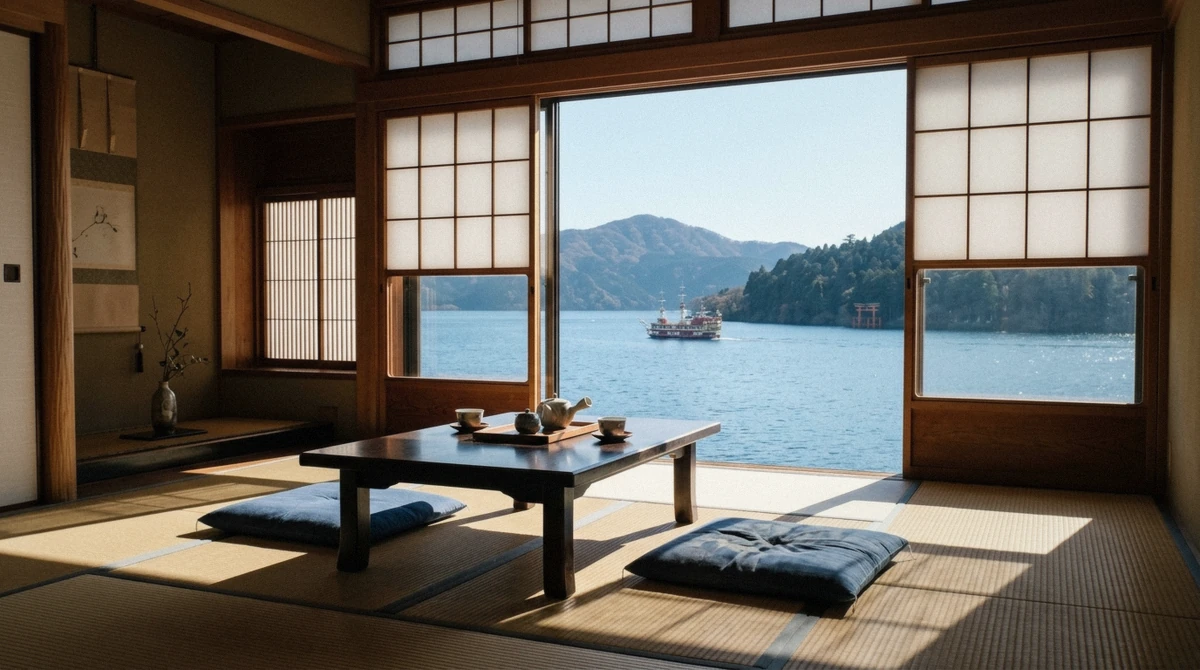
Where to stay in Hakone comes down to one trade-off: Hakone-Yumoto puts you closest to the train and furthest from the lake, while Moto-Hakone on the lake shore puts you on the water and furthest from the trains and late restaurants. First-timers on a single overnight do best in Yumoto; anyone building a morning around the four ports on Lake Ashi does better sleeping near Moto-Hakone or Gora. Below is each area's trade-off, a map, and how long to stay before comparing rooms.
Quick answer The four areas, and which one puts you on the water
Hakone-Yumoto suits first-timers who want the arrival station's restaurants and the shortest transfer from Tokyo. Moto-Hakone on the lake shore suits anyone who wants an early boat before the crowds land. Gora suits a mountain-side onsen stay near the museums, and Sengokuhara suits travelers who want space and quiet, off the main loop.
Key takeaways
- Hakone-Yumoto is the arrival station with the most ryokan, but it is the furthest of the four from the lake shore
- Moto-Hakone sits right on the four ports on Lake Ashi, best for an early sailing before the coaches arrive
- Gora is the mountain-side base, midway on the loop by the cablecar
- Sengokuhara is the quiet, secluded highland option, slightly off the main loop
- A two-night stay pairs well with Hakone day tours from Tokyo run as a single half day rather than the whole itinerary
- Travelers who want door-to-door convenience without picking a base can take a private guide who starts at your hotel
The Four Areas, Compared
One trip, four different bases
Each area answers a different question: closest to the train, closest to the water, closest to the mountain, or furthest from all three crowds. None is wrong; the choice follows what you plan to do with your evenings.
| Area | Suits | Trade-off | Distance from the lake |
|---|---|---|---|
| Hakone-Yumoto | First-timers, the arrival station, most ryokan and restaurants | Furthest of the four from the lake; you commute west each day | About 20–25 minutes by bus or train transfer |
| Gora | Onsen plus sightseeing, midway on the loop by the cablecar and museums | Quieter evenings, mountain-side, not on the water | About 25–30 minutes via the cablecar and ropeway |
| Moto-Hakone (lake shore) | The torii, lake walks, early boats before the coaches arrive | Hardest base without a car; restaurants close early | On the water |
| Sengokuhara | Highlands, pampas grass, open landscape, luxury hotels | Slightly off the Freepass loop, the most secluded | About 15–20 minutes by bus |
How the Choice Changes with Who You Are Traveling With
Couples, families and groups
Couples on their first visit tend to do best in Moto-Hakone or Gora, where a ryokan stay with an in-room bath and a kaiseki dinner is part of the experience rather than a logistics problem. Families with young children often find Hakone-Yumoto easier in practice, since the larger hotel-style properties there are more likely to offer flexible dinner timing and rooms with beds rather than only tatami and futon.
Groups of three or more traveling together get the most out of Sengokuhara's larger resort properties, which tend to have bigger room configurations and more space to spread out in the evening than the smaller ryokan that dominate the other three areas.
Which Area Fits Your Trip
If This is your first visit and you have one overnight
Stay in Hakone-Yumoto. It has the most rooms, the shortest transfer from Tokyo, and restaurants that stay open past sunset
If You want the lake at sunrise before the day-trip buses arrive
Stay in Moto-Hakone, on the shore beside the torii, and take the first sailing of the morning
If You want an onsen evening and easy access to the museums
Stay in Gora, midway on the loop next to the cablecar
If You want quiet and open scenery over convenience
Stay in Sengokuhara and expect a longer bus ride into the loop each day
If You are not staying overnight at all
Day-trip instead. A private guide can start from your Tokyo hotel, see a private guide who starts at your hotel
Map of the Four Areas
Where each base sits relative to the lake and the loop, so you can judge the commute before booking a room.
Hakone-Yumoto
The easy first base
Hakone-Yumoto is the arrival station and carries most of the ryokan and restaurants, which makes it the easy first-timer base, but it is the furthest of the four areas from the lake. You will commute west toward the water each morning you want to see it, adding roughly 20 to 25 minutes each way once transfers are counted.
In exchange you get the most choice of places to eat after dark, the shortest run back to Tokyo on your last morning, and easy access to the riverside footbaths that line the town center.
Who it actually suits
Yumoto rewards travelers who value a full evening of choice over proximity to any single sight. Ryokan here range from small family-run inns to larger hotel-style properties with communal baths, and the density of restaurants means you can decide where to eat once you have arrived rather than booking dinner in advance. It is also the base that makes the most sense if your itinerary includes a late arrival from Tokyo or an early departure the next morning, since it sits closest to the train line back.
Gora
The mountain-side option
Gora sits midway on the loop beside the cablecar and the museums, a mountain-side base rather than a lakeside one. It is a genuine onsen town in its own right, with open-air baths built into the hillside and a compact center that empties out after the day-trip crowds head home.
The trade-off is straightforward: you are not on the water, so a morning at the lake means riding the cablecar down and the ropeway across before you reach a pier at all.
Good for a museum morning
Because Gora sits close to the open-air art museum and several smaller galleries, it works well for travelers who want to spend a morning indoors before heading down to the lake in the afternoon, when crowds at the piers have often thinned from their midday peak. Rooms here skew toward traditional ryokan with private in-room baths, a step up in privacy from the shared communal baths more common in Yumoto.
The Lake Shore at Moto-Hakone
On the water, at a cost
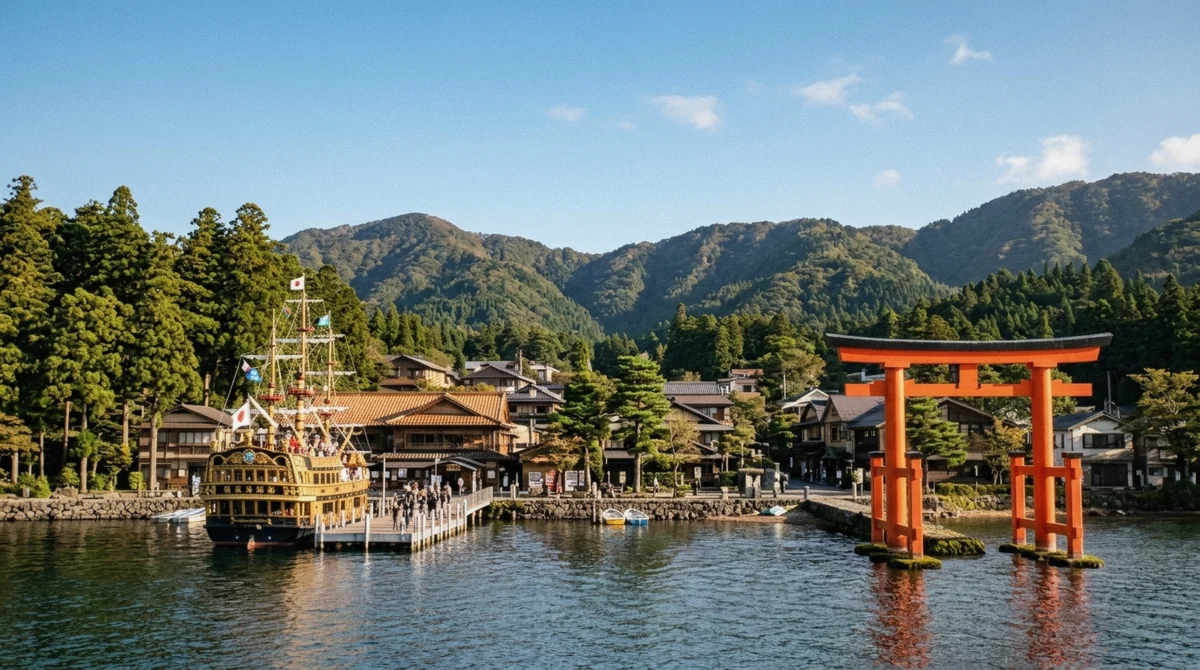
Moto-Hakone puts you on the lake shore beside the shrine torii and lets you take a boat before the coaches arrive, which is the one thing no other base can offer. The vermilion Heiwa no Torii stands in the water a short walk from most lodging here, and an early sailing on a clear morning is the quietest version of the crossing you will get.
But it is the hardest base without a car and restaurants close early, so a ryokan dinner is often the practical choice rather than an evening out. Public transport into the deeper loop also thins after dark.
Worth the trade-off if the lake is the point
For travelers whose whole reason for visiting Hakone is the lake itself, rather than the ropeway, the museums or the onsen towns, Moto-Hakone is the only base that puts the water at your doorstep rather than at the end of a transfer. Book a ryokan with dinner included here rather than planning to eat out, since the handful of restaurants along the shore road close by early evening and reopen only for the next day's lunch trade.
Sengokuhara
The quiet highland
Sengokuhara is the highland area, open landscape and pampas grass, and sits slightly off the Freepass loop, which makes it the most secluded of the four. It draws travelers who want space over convenience, and it carries a concentration of larger resort-style hotels that suit longer stays.
The cost is distance: reaching the lake or the ropeway from here adds a bus leg that the other three areas do not need.
Best for a longer, slower stay
Sengokuhara suits travelers who are not trying to pack the whole loop into one or two days, since the extra bus leg into the loop makes a single quick sightseeing run less efficient than from the other three bases. It rewards visitors staying three nights or more who want room to spread out, open mountain views from the room itself, and evenings away from the day-trip crowds entirely.
One Night or Two
What a second night buys
The Hakone Freepass bought from Odawara costs 6,000 yen for two days, which is what makes a two-night stay cheaper to move around than a single rushed day: one pass covers the trains, the cablecar and the boat across both days rather than forcing a same-day dash. See what the Freepass covers for the full breakdown of what that fare buys. Splitting the loop across two mornings also means you are never rushing the ropeway or the crossing to catch a return train.
One night is enough if you only want the lake and one ropeway crossing. Two nights lets you add a second area, an onsen evening in Gora and a lake-shore morning in Moto-Hakone, without compressing either into a half day. Check Hakone month by month before choosing which two days, since a clear-air window is worth planning a stay around.
Staying in Hakone Versus Day-Tripping from Tokyo
Two hours each way, or one round trip
A guided day trip from Tokyo runs about ten to eleven hours door to door, against a two-hour reach each way if you sleep in Hakone, which halves the transit time but adds a night's lodging to the budget. For a single loop and a lake crossing, a day trip is genuinely enough; the math changes once you want two ropeway crossings or an onsen evening that a bus schedule cannot accommodate.
Anyone deciding between the two is really deciding how much of the day they want spent moving. A day tour handles the transit and the ropeway together, which is the simpler choice if a night away is not part of the plan.
Booking Notes by Season
When rooms disappear first
Availability tightens well before price does. Ryokan rooms in Moto-Hakone and Gora, especially those with private in-room baths, are the first category to sell out for the autumn foliage weeks and for Golden Week, often a month or more ahead. Hakone-Yumoto, with its larger stock of rooms, tends to hold availability a little longer into each peak window, which makes it the more forgiving choice for late planners.
Outside the two peak windows, a week or two of lead time is usually enough across all four areas, though the most distinctive lake-view rooms in Moto-Hakone still move faster than standard rooms elsewhere, since there are simply fewer of them to begin with.
Getting Between the Four Areas
The loop connects all four
The Hakone Tozan railway, the cablecar and the ropeway link Yumoto, Gora and the Togendai side of the loop directly, so moving a bag between bases does not require backtracking through the lake shore. Moto-Hakone and Sengokuhara both rely more on bus connections than on the rail-and-cable chain, which makes them slightly less convenient for travelers who want to change bases mid-trip rather than pick one and stay put.
For a two-night stay split across two areas, pairing Yumoto with Gora keeps every transfer on the rail-and-cable chain. Pairing either with Moto-Hakone works well too, provided the bus timetable for that day is checked in advance rather than assumed.
One Night or Two
The question in the search results almost as often as the areas themselves. The answer turns on how much of the caldera you intend to cover and how early you want to be on the water.
| Stay | What fits | What gets cut | Suits |
|---|---|---|---|
| Day trip from Tokyo | One pass through the circuit, roughly eleven hours door to door | Museums, onsen, an unhurried lunch, the early boat | Tight itineraries |
| One night | The full loop without rushing, an onsen in the evening, one early sailing | Two of the museums, the Sengokuhara side | Most visitors |
| Two nights | The loop, the museums, a second crossing, and a morning with no schedule | Very little | Anyone who came for the onsen as well as the view |
One night is the answer for most people, and it changes the trip more than the extra cost suggests. The first boats leave before the coaches from Tokyo have arrived, and the difference on the deck is obvious.
Questions About Where to Stay in Hakone
What part of Hakone should I stay in?
Hakone-Yumoto for a first visit and the most restaurant choice, Moto-Hakone for lake access, Gora for an onsen evening near the museums, and Sengokuhara for quiet and space. Each trades convenience for a different priority.
Should I stay in Hakone-Yumoto or Gora?
Yumoto if you want the most restaurants and the shortest run back to Tokyo; Gora if you want a genuine onsen town and easy access to the cablecar and museums. Yumoto sits closer to the train, Gora closer to the middle of the loop.
Should I stay one night or two in Hakone?
One night covers the lake and one ropeway crossing comfortably. Two nights, paired with a two-day Freepass, lets you spread the loop across two mornings and add a second area without rushing either.
Is it better to stay in Hakone or near Mount Fuji?
Hakone gives you the lake, the ropeway and easy transit from Tokyo in one loop. Staying near Mount Fuji itself puts you closer to the mountain but further from the Lake Ashi crossing and the shrine at Moto-Hakone; the choice depends on whether the lake or the mountain base is the priority.
Where should you stay to be near Lake Ashi?
Moto-Hakone, directly on the shore beside the torii. It is the only one of the four areas where the water is a short walk rather than a bus or cablecar ride away.
Can you stay in Hakone without a car?
Yes, and most visitors do. Hakone-Yumoto and Gora both sit on the train and bus network and need no car. Moto-Hakone and Sengokuhara work without one too, but with fewer late-evening options once the buses thin out.
Do I need to book a hotel in advance for Hakone?
During the autumn foliage weeks in October and November and around Golden Week in late April, yes, well in advance; ryokan rooms in Moto-Hakone and Gora sell out first. Outside those windows, a week or two of notice is usually enough.
None of the four areas is a wrong choice; each simply answers a different question about how you want to spend the evening. Pick the trade-off that matches the itinerary rather than the area with the most photographs online, and the rest of the loop falls into place around it. Which pier your base sits near is mapped on the Lake Ashi cruise homepage.